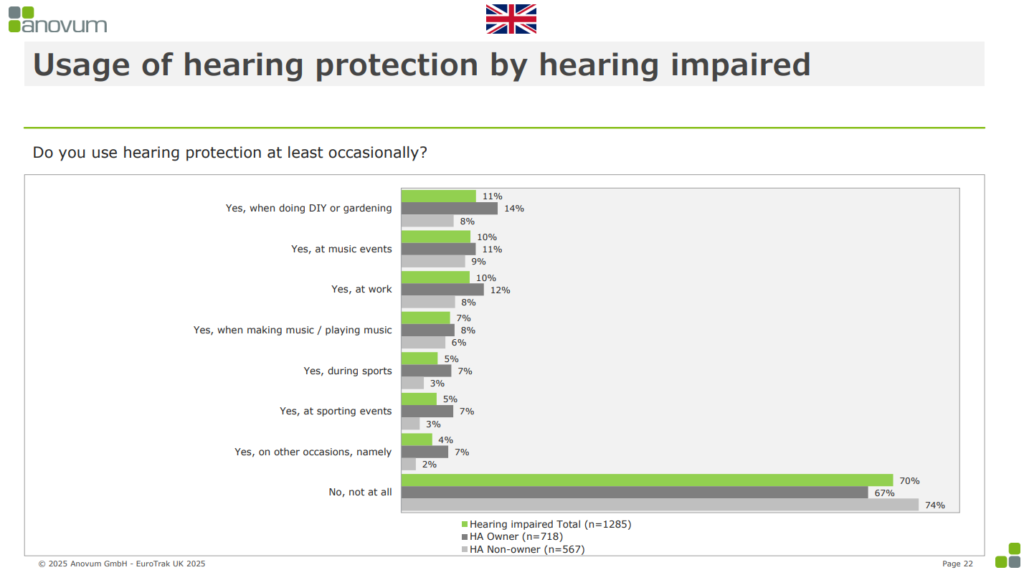
This shows that despite hearing loss being one of the most common, and preventable, health conditions in the UK, most of us are still doing little to protect our hearing in everyday loud environments.
So why is this happening? And what’s at stake if we continue to ignore it?
Hearing protection at music events.
In the UK, Summer’s festival season is a national institution. But the data shows that only 10% of people with hearing loss wear protection at music events, despite venues often exceeding 100 decibels – a volume that can cause permanent damage in under 15 minutes.
“It’s surprising how many people still equate earplugs with muffled sound or assume they’re only for professionals,” says Paul Surridge, Chairman of BIHIMA. “Modern hearing protection is designed to preserve the richness of music and sound while protecting the listener’s hearing, yet a tiny percentage of people are making use of it.”
BIHIMA has previously highlighted the risks young people face during festival season in this blog and every year there are repeated public warnings and stats published to highlight the risks. And yet, as Eurotrak data shows, people’s behaviour hasn’t yet shifted.
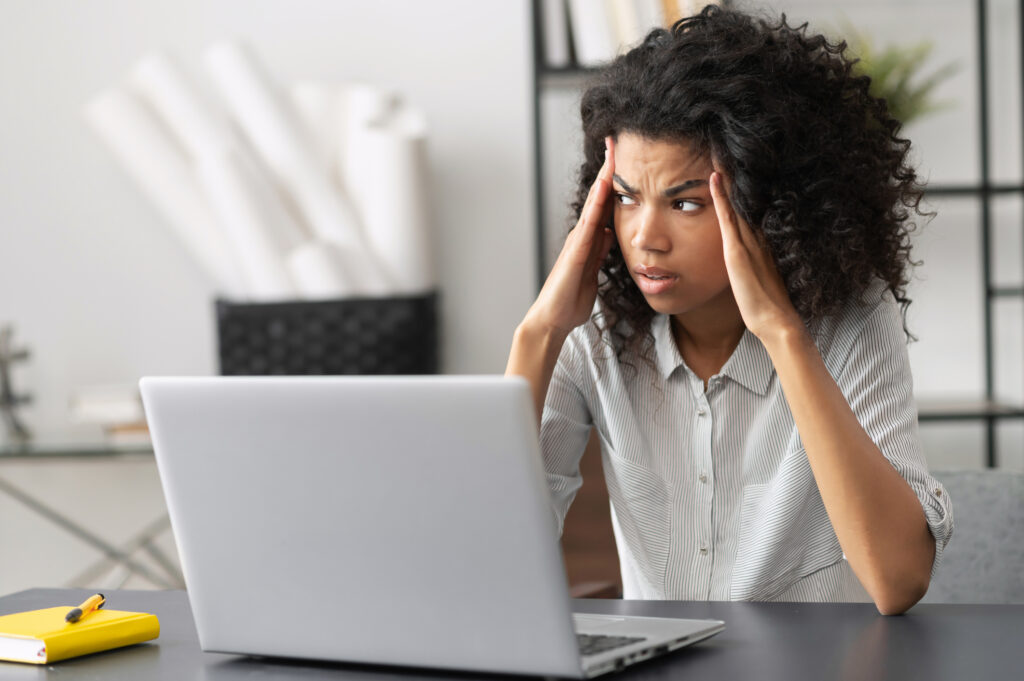
Eurotrak findings also revealed that only 10% of hearing-impaired individuals report wearing hearing protection at work. Initiatives such as the Health and Safety Executive’s Workplace Noise Intervention project strive to tackle this problem in high noise industries: however, the reality of the problem is much broader. Offices with loud HVAC systems, busy kitchens, call centres, and logistics warehouses and many other settings can all push exposure over safe limits.
“Hearing loss doesn’t just affect the individual; it has a ripple effect,” Paul explains. “It impacts productivity, communication, and wellbeing. The social cost is enormous. Businesses have a duty of care, but they also have an opportunity: investing in hearing health now means avoiding higher costs later.”
In a recent interview with Ben Hancock of Oscar Acoustics, we learned how 30% of study participants said that they worked from home to escape workplace noise, while a third had changed their working hours to avoid peak noise periods. He also said that 1 in 5 had experienced conflict due to noise-related tension. “People are becoming less tolerant to noise,” Ben notes. “And the irony is, as offices get more modern – with open plans, hard floors, and no acoustic ceiling tiles – they’re becoming less workable. We’re seeing a real impact on wellbeing, collaboration, and even employee retention. The cost attached to this is huge.”
In addition, Eurotrak 2025 reported that only 5% of people wore hearing protection at sporting events. This is particularly worrying in motorsport, where sound levels can reach up to 105 dB; this is loud enough that even relatively short exposure can be harmful. This means that even one afternoon without protection can result in life-long damage.
Whether it’s the roar of the crowd or the engines themselves, the damage is cumulative. And yet, public awareness campaigns around hearing safety in sports remain virtually non-existent.
How can we encourage people to better protect their hearing?
Eurotrak 2025 makes one thing abundantly clear: the UK has a hearing protection problem. And unlike many other health issues, this one is entirely preventable.
To tackle the challenge, we must – collectively – make proactive changes. For example:
- Festival organisers incorporate earplug information with tickets and make hearing protection available on site.
- Employers implement regular hearing checks and provide high-quality protection to the work environment and in PPE.
- Stadiums and sports venues offer signage and product access for fans.
- Audiologists help bridge the gap by educating patients and advocating for proactive hearing health.
“Part of it is perception,” says Paul. “People still think hearing loss is something that happens when you’re older, or that protection is only needed on construction sites. But noise-induced hearing loss can affect anyone, and it’s irreversible.
“We need to normalise hearing protection. Make it as routine as sun cream or seatbelts. That means educating people, supporting employers, training audiologists, and making high performing hearing protection widely available in loud environments.”