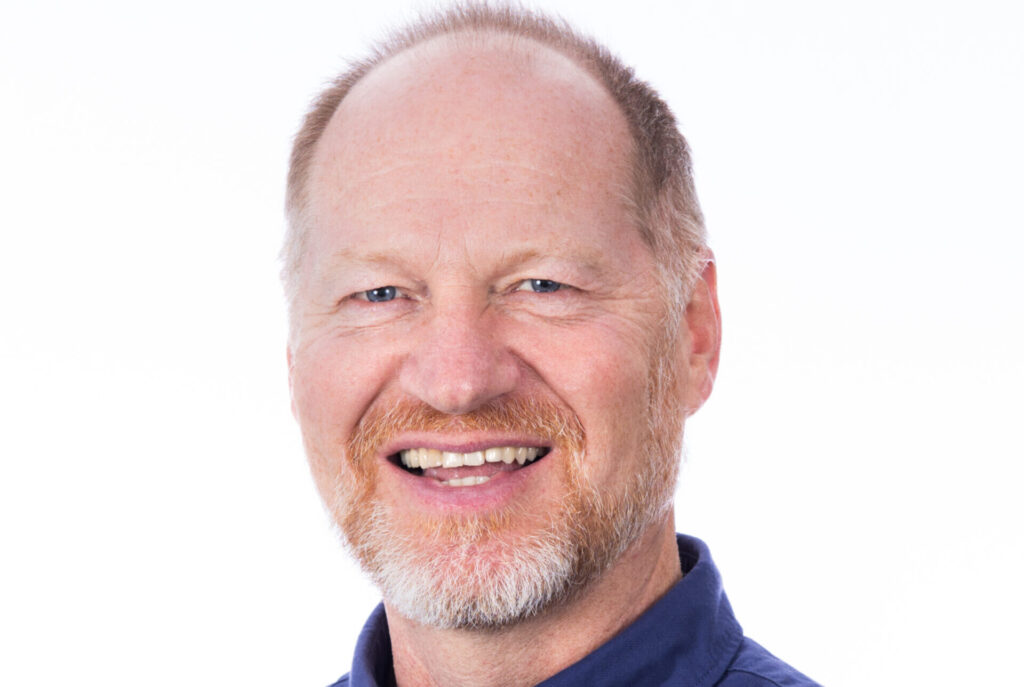
Professor Kevin Munro is a prominent figure in audiology and a notable voice in the conversations around the link between dementia and hearing loss.
Recently, a joint Position Statement with Clinical Guidance on the link between adult-onset hearing loss and dementia was written by a group of authors led by Professor Munro. The aim was to address any potential misunderstandings hearing professionals might have on the topic, provide a balanced view of the evidence and offer guidance to those working with clients who have hearing loss. The position statement and clinical guidance were published as a collaborative effort between the professional bodies of the British Society of Hearing Aid Audiologists, the British Society of Audiology and the British Academy of Audiology. This document is the latest in a collection of publications from Professor Munro, who has been working to address any misunderstandings about the connection between dementia and hearing loss. In partnership with Professor Piers Dawes, Kevin has had articles on the subject published in the journal Ear and Hearing (receiving the Readers’ Choice award for the most downloaded pieces in 2024), the International Journal of Audiology, Audiology World News, ENT and Audiology News, Australia’s Audiology Now and America’s Audiology Online.
We sat down with Kevin to talk about his view on the ‘problematic narrative’ around the relationship between dementia risk and hearing loss, and what has happened since the launch of the Position Statement and Clinical Guidance.
Kevin, could you share a bit about your background?
I’ve always worked in audiology, but my career has shifted from clinical work into education and training, and eventually expanding into research. These days, any clinical work I do is directly related to my research.
Until 18 months ago, I was Director of the Manchester Centre for Audiology and Deafness, but now I am Director of Research for Patient Benefit at the National Institute for Health and Care Research. I am continuing in my roles as Ewing Professor of Audiology at the University of Manchester and honorary Consultant Clinical Scientist at Manchester NHS Foundation Trust.
I was also born with no measurable hearing in my right ear and have now acquired a high frequency hearing loss in my left ear. Back then, there were no newborn hearing checks, so my congenital hearing loss wasn’t diagnosed until I was several years old. I’d like to say that this is what ignited my interest in audiology, but that isn’t really the case – it just happened to be that audiology is a world I’ve always been a part of, and when the opportunity came along to make this my career I thought, why not?!
We’re very glad it ignited that interest! Your work to challenge the mistaken belief that there is good quality evidence of a causal link between hearing loss and dementia has had a significant impact on the world of hearing care. How did it come about?
Before answering your question, can I just underline the important point that the nature of the relationship between hearing loss and dementia (and hearing loss and a number of other health conditions) is not clear-cut. The association is sometimes interpreted as evidence that hearing loss causes dementia, and that treating hearing loss will reduce the risk of dementia. However, there is currently no good quality evidence to support (or refute) either of these claims. This means we need to handle the uncertainty with care.
My colleague, Piers Dawes, and I have had a long-lasting interest in the effects of hearing loss on cognition and cognitive decline. This is because we know that hearing loss frequently doesn’t occur in isolation but is associated with a number of health conditions. It’s something we have explored and written about for over a decade. We are interested to know whether those who regularly wear hearing instruments would experience less cognitive decline and, if so, why? For example, could any benefit be due to reduced isolation and social connections?
One of our earliest studies used existing data to compare people with hearing loss who did and did not acquire hearing instruments. Those with hearing instruments had better cognitive function. However, the two groups didn’t show any difference in terms of social isolation, at least on the outcome measures used in the study. Also, as with all data that has been collected by simply observing and comparing different groups of people, we need to remember there may have been fundamental differences between the two groups even before they acquired hearing aids.
We then started to see some highly publicised studies presenting hearing loss as a major risk factor for dementia. These studies – with the Lancet commission having, arguably, the biggest ripple effect – put dementia and hearing loss onto the radar of policymakers, health professionals, the media and the public. There were two main things that struck me about this:
First, this messaging has caused a substantial amount of anxiety for those with hearing loss, including members of my own family. It is difficult to underestimate the impact. Dementia touches a great many people’s lives in one way or another and is an enormous fear for many. Now those living with hearing loss believe that dementia is just around the corner. The same anxiety will apply if, for example, we do the same with other health conditions where there is an association with hearing loss, such as Parkinson’s Disease.
I started to see more organisations using this perceived relationship between having hearing loss and developing dementia as part of their own campaigns, encouraging people to get hearing checks and wear their instruments as a way of preventing or reducing the risk of having dementia. This was done in good faith I’m sure, but it highlighted the gap between the complexities of a scientific study and the key messages people take away. It was misleading and scaremongering.
What we know is that untreated hearing loss can result in a reduction of cognitive function, as people can become more isolated from their family, friends, colleagues and society in general if they struggle to hear or properly engage in conversations and social situations. We also know that a reduction in cognitive function can influence a person’s risk of developing dementia, so although a path can be traced between untreated hearing loss and dementia, it certainly isn’t a direct link, and both elements will be affected by a range of variables along the way. It’s a more complex message, but that’s what we need people to understand: the importance of treating hearing loss to improve and maintain cognitive function.
Second, the publicity meant that more and more people were talking about hearing loss. I see that as a positive development. Finally, hearing loss was on the public agenda and had become an important topic for government and policymakers, which is fantastic. Here, finally, was an opportunity to make it clear that hearing loss is central to health and wellbeing. Healthy hearing is required for healthy ageing and keeps people socially engaged and living independently. However, there has been an emphasis on causation, and it is often assumed, incorrectly that hearing loss has been shown to cause dementia. In fact, it is possible that pathological changes caused by early dementia initially reveals itself as a hearing loss or maybe there is something else that causes both hearing loss and dementia. With the emphasis on hearing loss potentially causing dementia, what happens next? Will government and policymakers lose interest in hearing loss altogether if this turns out not to be the case? Have we – as audiologists – actually shot ourselves in the foot?
I do think it’s integral that we talk about how communicating better and freely – facilitated by hearing instruments – can help us age well. I fact, we can think of the need for good hearing across the lifespan i.e., growing, living and ageing well. But it’s a sensitive subject and one we need to be careful sharing, especially because, as audiologists, we are not experts in dementia. Some individuals and organisations may have been overegging the ‘link’, and almost frightening people into getting hearing instruments as a way to mitigate their dementia risk. Here is a firsthand real-world example. I overheard a woman in an NHS waiting room who saw a poster promoting the benefits of treating hearing loss and her “take away” was simply that her hearing loss would cause dementia. The current uncertainties in the evidence were completely lost, and it was a stark illustration for me of the risk of not getting our communication right.
After talking about the subject at length and writing a piece with Piers for Ear and Hearing Journal, I was asked to write a commentary about the hearing loss section in the updated Lancet commission for ENT and Audiology News. The British Society of Audiology then reached out to ask me if I would lead a position statement and consensus document about the uncertainties around the link, and how we can better manage these. The British Society of Audiology already had guidelines in place for how to conduct a position statement at pace in a potentially fast-changing environment. I was keen to get lots of different organisations involved so we could speak with a single voice– which was actually a very easy job! Lots of people wanted ‘in’ on the statement and it was published within two months of starting the work. This is unusually fast and showed we’d touched on something incredibly important to the profession. We consulted across the UK and beyond. Importantly, the core team included service users with lived experience as well as colleagues in old age psychiatry.
It was clearly a piece that needed to be seen – what has the response been to it?
It’s generated an enormous amount of interest. I’ve had people from all around the world contact me to say how helpful it is, as well as asking permission to reproduce it in their own countries. It’s also kickstarted positive conversations with organisations that have not understood the current uncertainties in the evidence. If I see a problematic narrative, on a website or a poster, for example, I share the Position Statement and trust that providing the evidence in a balanced and user-friendly manner will help them modify their messaging. This is not about criticising people: it is about a balanced approach with positive messaging. Of course, as new evidence emerges, the Position Statement might need to be modified.
That sounds very positive – so, what’s next?
I have been surprised by the number of invites to speak to associations and groups. What’s important is for people to be aware that the uncertainty in the existing evidence means: (1) hearing loss might contribute to cognitive decline, or it might not, and (2) hearing instruments might delay cognitive decline or they might not. What is clear, however, is hearing better can help you live better and think better. Listening and trying to communicate when you have a hearing loss can be a challenge. If hearing aids help you to hear more easily, this means your brain probably doesn’t have to work so hard. That could free up your brain to do other things, and that could be good for people with or without dementia.
More research is needed to explain the link, but also to address the needs of the many individuals who live with both hearing loss and dementia. Let’s focus on what we do know about people’s hearing, how they can look after themselves and the technologies and therapies available to support with that. Let’s focus on positive messaging and the wider spectrum of behavioural change.


