For decades, induction loop systems have been the backbone of assistive listening in public spaces. While familiar and widely deployed, they were designed for an analogue world. As hearing care has become increasingly digital, the limitations of legacy systems – from sound quality and lack of privacy to high installation costs and inconsistent user experience – have become harder to ignore.
Auracast™, a Bluetooth-based broadcast audio technology, was developed to address these challenges head-on. And crucially, it has been shaped not just by engineers and manufacturers, but by the real-world needs of people who rely on assistive listening every day. We spoke to Thomas Olsgaard, Principal Engineer in the Hearing Division at GN and one of the key figures behind Auracast development, about what led to the launch of this pioneering technology.
Turning Auracast into a digital standard
“Up until Auracast, we’ve been working with the loop system; and it’s a well-working, well-known system,” explains Thomas, “But it’s analogue, and it lacks many of the things you get in digital systems; privacy, stereo sound, better sound quality, multiple channels at the same time, and lower installation costs.”
From the outset, the ambition behind Auracast was not simply to create a better technical solution, but to establish a global industry standard. In a digital world, interoperability matters. Standards allow multiple manufacturers, venues and technology providers to participate in a shared ecosystem; something that is essential for accessibility at scale.
Bluetooth emerged as the natural foundation. What began over six years ago as a hearing-aid-focused standard evolved further when consumer audio manufacturers, including those developing earbuds and headphones, recognised its wider potential. The result is a technology that is rigorously specified, independently certified, and designed to work consistently across devices.
“This time, the hearing-impaired community was at the forefront,” says Olsgaard. “That was a huge driving force and motivation for all of us working behind the scenes.”
Adoption, momentum and the UK context
Early adoption of Auracast has varied internationally. The US moved quickly and the UK is now gaining momentum, driven in part by strong policy focus on inclusion and accessibility.
“The UK market is different,” Olsgaard notes. “There’s a high focus on inclusion and helping people with hearing loss. Once that opportunity was recognised, it was taken seriously.”
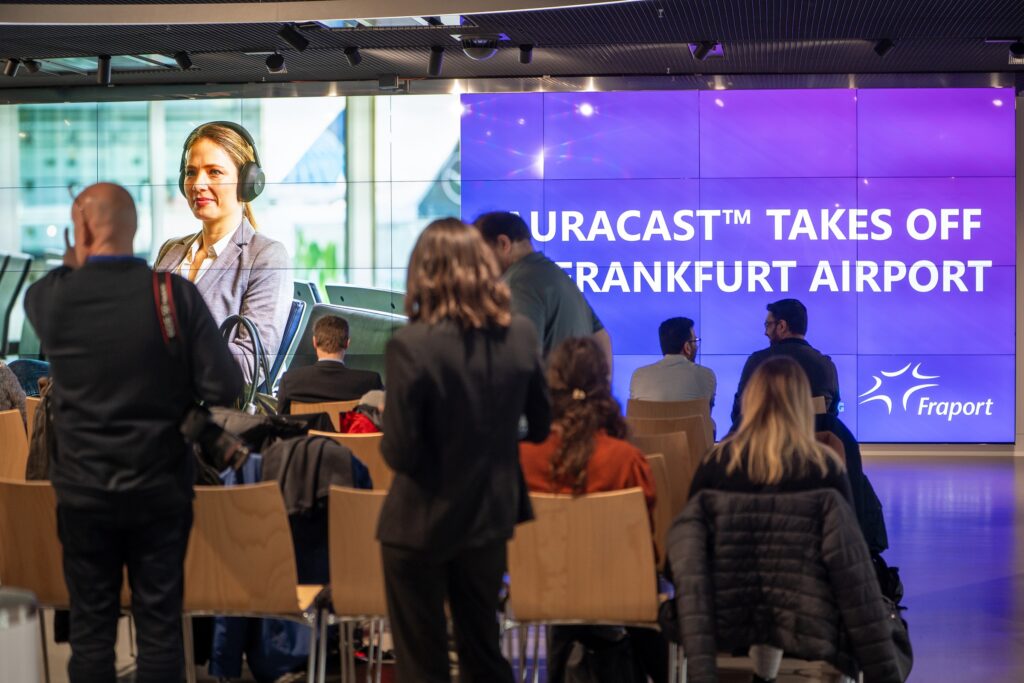
Lower installation costs compared to loop systems are a key factor. Without the need to install extensive cabling throughout buildings, organisations can deploy Auracast more flexibly and cost-effectively – an important consideration for publicly funded bodies such as the NHS.
“With the same budget, you can reach far more places,” Olsgaard explains. “That’s where it becomes really interesting. ”
Designing with – and learning from – users
While engineers can anticipate many use cases, the development of using Auracast within hearing instruments has reinforced a familiar truth: real-world usage always reveals new insights.
“When you bring out new technology, there are things you can never predict,” says Olsgaard. Early trials in theatres, lecture halls and public venues highlighted the practical challenges that traditional systems struggled to address, such as the need to sit in specific locations, or the difficulty of sharing experiences with friends and family.
User feedback also revealed unexpected benefits. For some people with hearing loss, combining audio with visual information such as captions proved essential. Others valued being able to sit further back, see the whole stage, and still receive clear, intelligible sound.
While improvements were made, the lesson was clear: simplicity. “Just press a button,” Olsgaard says. “That’s what we learned from loops. The technology has to be easy to understand, easy to access, and reliable.”
Rather than waiting for a ‘perfect’ solution, Auracast has evolved through continuous updates and incremental improvements, informed by ongoing collaboration with users and venues, and now provides a transformative experience for hearing aid wearers.
A lived experience: “It was just phenomenal”.
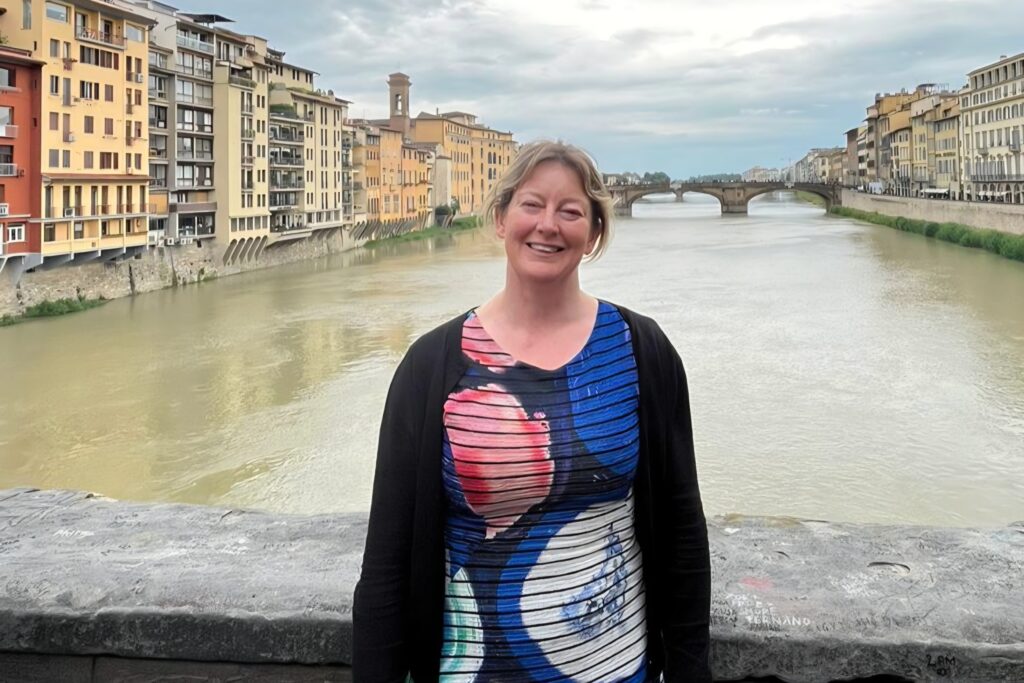
For Angela Carpenter, who has been deaf from birth, the impact of Auracast has been deeply personal.
“Hearing loss is a hidden disability,” she explains. “You can be in a room full of people, all laughing and joking, and still feel completely isolated.”
After years of navigating inconsistent assistive listening systems in theatres, conferences and public venues, Angela took part in Auracast trials supportedby GN at St Paul’s Cathedral. The experience was one she will never forget.
“The clarity was incredible,” she recalls. “The range was amazing. It felt like the person speaking was right next to me, even when they were far away.”
During a choral performance, the emotional impact was immediate. “There were tears,” she says. “It was such a step forward.”
What stood out most was not just sound quality, but how easy it is to use. Connecting to Auracast through her hearing instrument app was intuitive, reliable and discreet: a stark contrast to systems that rely on unfamiliar receivers, poorly maintained loops, or staff who are unsure how the technology works.
Auracast’s potential extends beyond people who wear hearing instruments. Because it is based on Bluetooth broadcast audio, it can be accessed via compatible earbuds, headphones or receivers, making it relevant for a much wider group. At workplace conferences, Angela has seen colleagues without hearing loss trial the technology using headsets and immediately recognise the benefit. For neurodivergent users, the ability to combine clear audio with personal noise reduction can make large events far more accessible.
“This isn’t just for deaf people,” Angela says. “It supports anyone who struggles to hear clearly in certain environments.”
That universal appeal is key to reducing stigma. Auracast allows people to access audio discreetly, without needing to single themselves out or ask for special equipment.
What comes next for Auracast?
The industry’s decision to release Auracast early, with a shared baseline standard, was deliberate. Interoperability is essential if accessibility is to be affordable and widespread.
Looking ahead, further developments are already underway. These include roaming functionality, allowing users to move seamlessly between broadcasts in complex environments such as transport hubs. GN Group have carried out tests in locations such as Bristol Temple Meads to track the way in which Auracast works when moving between locations and underground in order to bring this to life. There are also new approaches being developed to enable access for people without smartphones, such as QR-code-based connections.
At the same time, advances in AI-driven sound processing are expected to play an increasingly important role. Dedicated chips and intelligent algorithms can further improve speech understanding, reduce listening fatigue, and adapt to complex sound environments.
“Speech understanding is the fundamental problem,” Olsgaard says. “If you don’t improve that, you’re on the wrong track, so it’s vital that we develop these technologies to work together in the best way possible to improve experiences for hearing aid users.”
For Auracast to reach its full potential, awareness and adoption must continue to grow among venues, transport providers, policymakers and the public, which GN Group facilitates wherever possible.
For users like Angela, the direction of travel is clear.
“It’s simple, it’s consistent, and it works,” she says. “Why wouldn’t this become the standard?”
As more manufacturers, venues and public bodies come on board, Auracast represents not just a technological shift, but an opportunity to redefine what inclusive listening looks like in a digital world.


