BIHIMA spoke to Anna Pugh - leading audiologist - about how the industry can work collaboratively to better support patients and colleagues.
BIHIMA recently interviewed Anna Pugh – audiologist, hearing therapist, tinnitus specialist and manager at West Norfolk Deaf Association. Having worked in hearing therapy and audiology for over 40 years, she is an enormous advocate for better supporting those with hearing loss. We spoke to her about what she sees as the main barriers stopping people from accessing hearing support services, why the industry needs to take a more holistic approach to hearing care and how we can do better to reach minority groups.
BIHIMA: Anna, can you tell us about your background and what first drew you to hearing therapy and audiology?
Anna Pugh (AP): Of course. After university, I worked at a hospital for mental wellbeing. While there I found that the patients who had to stay in the hospital’s care the longest were those with severe communication issues. Many would self-harm, partly due to their inability to communicate. I realised that I desperately needed the skills to better support these people, and so I enrolled at the City Lit Centre for Deaf Education. From there, I went on to work for Sense before retraining as a private audiologist. The rest, as they say, is history!
BIHIMA: You wear a lot of hats when it comes to hearing therapy and audiology – in your experience, what are the biggest barriers stopping patients accessing hearing care when they need it?
AP: There are a few different strands to this. There’s a huge body of research out there showing that the average time between a person first noticing they have an issue with their hearing to doing something about it is between seven and ten years and starts from the age of around 47. The degeneration of your hearing in that time is enormous; you will also lose communication skills and neuro pathways, and you may even increase your chances of developing dementia.
There are a multitude of reasons why people wait so long to seek treatment but, in my experience when people make the decision to do something about their hearing loss, they can also feel that they are resigning themselves to being old, or ill, or disabled. There’s a huge stigma attached to that. Plus, they must accept that they will need to be treated in hospital as a passive patient. This can be frightening, and there’s a real lack of control too. Therefore, we find a considerable sense of avoidance. Taking that leap and doing something about your hearing loss can feel worse than not doing anything.
Of course, there is also a lack of resources; waiting lists are growing and prices are rising. Hearing instruments can cost between £3,000 and £6,000. Coupled with the enormous rise in cost of living, the fact is that the system simply isn’t working for everyone.
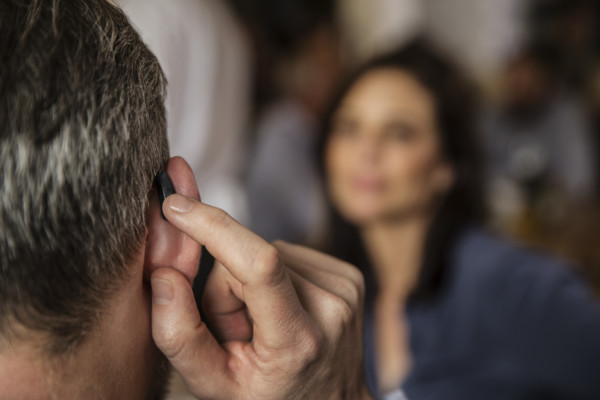
"There's a stigma...we need to change the narrative around hearing technology"
BIHIMA: How could the business model be improved? What can be done to reduce some of those barriers?
AP: We’re on the cusp of some radical changes in the profession; a move away from just dispensing and selling hearing instruments to a more holistic approach. I believe this is a good thing.
If we don’t change and adapt, we’ll find ourselves in the same position as typesetters: a profession that used to be at the cutting edge of technology, and now – well, many people wouldn’t even know what the name referred to. We cannot purely focus on technology anymore. We need to bring our attention to the end goal both for patients and those working in audiology and health care, and though the conversations around this are happening, I think that change is still a while away.
There’s a lot that falls into this category of change. Firstly, I think there needs to be far better auditory training for users. You cannot just give someone a piece of kit and expect them to run along with it, happy as Larry. There’s a saying in the profession that there are three kinds of hearing instruments: those that sit in the ear, those that sit behind the ear, and those that sit in the drawer. And there’s even research to prove this – around one in three hearing aids will end up in the user’s drawer. This is undoubtedly due to lack of rehabilitation and personalisation, so this is a vital place to start.
Also – and this comes back to the stigma around hearing instruments – we need to change the narrative around hearing technology. It should be seen as precisely that; a form of technology that will improve your quality of life, rather than a sickness, a disability, or a sign of your age. This could happen by shifting the way we talk about and market hearing technology. Current marketing that we might see in doctor’s waiting rooms or even in the media can depict hearing instruments as these cheap, enormous, and ugly things – a lot of the time they aren’t even hearing instruments (more like loudspeakers), and they look nothing like today’s technology. People will see this and think, no thank you, I don’t want to walk around with that in my ear!
Think about the microtechnology used in earbuds, which are commonplace for many people now. If something could be done within those earbuds to help people hear better while socialising, the uptake could be enormous. The design of hearing instruments has improved considerably but they still bear the label of being a ‘hearing aid’.
BIHIMA: Recruitment is a problem in hearing care right now – why do you think this is?
AP: Some of the reasons I’ve already mentioned might put some people off, but also there’s a training and accessibility issue. Typically, we are finding a lack of career and skills progression opportunities. Many people are setting up their own practices, which means that organisations are missing out on high quality professionals – thus leading to staff being overworked and waiting times increasing – and the people themselves can feel quite isolated.
There’s also a professional issue with certain business models and some larger organisations. They can find themselves shackled into contracts where they are pressured into reducing service times and increasing productivity to get more numbers through the door. The worry with this is that it results in a reduced level of care, and you must ask yourself – who are we actually serving here? It’s why many audiologists are leaving, and the ripple effect of this lower level of care is that the user isn’t satisfied with their service or their final product, which is often a hearing instrument.
BIHIMA: Do you think there are any sections of society missing out on the hearing treatment that they need?
AP: As an industry, I don’t think we are reaching minority communities. There are no two ways around it. One of the core influencing factors here is that those from minority groups do not necessarily feel represented in a lot of the marketing out there about hearing care.
We are attracted to what we see ourselves in – this is human psychology 101. Think about all the different groups who are rarely (if ever) seen in communications and marketing around healthcare in general.
Can you think of the last time you saw an Asian or Black person in a hearing care advert? Or an Asian or Black woman for that matter, with implications of hair and wigs to consider? Or a woman wearing a hijab? Or a Jewish woman? A Sikh man? And we know, for example, that diabetes is more prevalent in Afro-Caribbean groups: one in four people with diabetes will experience hearing loss, so clearly, we need to reach these people on a far deeper level.
It’s a major issue of diversity: these groups are not often represented, and they are only going to be more compelled to participate if they feel seen. For everyone working in the hearing industry, it’s our job to change this.