 Specsavers recently released its report; It’s Time to Talk About Hearing, shedding light on the current state of hearing health in the UK while urging the new government to take action towards improving audiology services across the nation.
Here, we delve into the key findings of the report and their implications for public health and the hearing instrument industry, as well as what BIHIMA is doing to tackle the issue.
The growing need for hearing health awareness.
Hearing loss is a significant public health issue affecting millions (latest figures suggest 18 million people in the UK are impacted by hearing loss), yet it seems to take up less of the public spotlight compared to many other health concerns.
We therefore wholeheartedly support Specsavers’ recent report and its emphasis on the need for greater public awareness and conversation around hearing health.
The campaign reinforces the evidence that untreated hearing loss can lead to social isolation, depression, and a decline in cognitive functions, advocating for early detection and intervention – both of which are crucial in managing hearing impairments effectively.
Proposed actions for the government.
The report also outlines several key actions for the Labour government to consider, aiming to make audiology services more accessible and effective. One major proposal is the establishment of a nationally commissioned primary care audiology service. This would provide a standardised level of care across the country, ensuring that everyone has access to high-quality hearing assessments and treatments while reducing NHS waiting lists; a concept that BIHIMA has been working on with NHS England to support the transformation of existing audiology services.
The report also advocates for integrating these services into community health settings, which would make them more accessible to the general population, especially those in rural or underserved areas. Additionally, it highlights the importance of equitable access to hearing care for vulnerable populations, including the elderly, housebound, and homeless individuals. The manifesto calls for specific measures to reach these groups, who are often at greater risk of untreated hearing issues but face significant barriers in accessing care.
While we think these are vital points, we think it can be taken even further. While we know that there are many who delay getting treatment for hearing loss or do not have easy access to care and therefore may benefit from wider availability of services, we also know that hearing loss is affecting more and more young people. That’s why we are calling for a hearing assessment to be included in the 40 year NHS health checks, as well as for better awareness arising and education campaigns from our government.
 Collaboration within the profession.
The call for a unified effort within the audiology profession is another crucial aspect of Specsavers’ report. The company urges audiologists, healthcare providers, and industry stakeholders to collaborate in enhancing the quality and accessibility of hearing care. This includes sharing best practices, standardising training and certification processes, and advocating for policies that support the expansion of hearing health services.
In a statement, Specsavers underscored the necessity of this collaboration, noting that a fragmented approach only hampers progress. By working together, the audiology community can more effectively address the growing demand for hearing care and ensure that advancements in technology and treatment are accessible to all who need them.
We agree with this concept, and support it through our annual audiologist survey (and the subsequent reports shared on findings) in which we explore the most pressing needs and feedback from those working in the hearing health industry across the country. Adding to this, we continue to build our relationships with like-minded health organisations to strengthen our awareness campaigns: this has included pieces with Alzheimer’s Research UK and Tinnitus UK.
However, we strongly believe that collaboration should stretch far beyond the audiology profession. In the past year, BIHIMA has developed campaigns reaching out to organisations that create loud environments and can contribute to damaging people’s hearing – such as the construction, sporting and music industries – to try and increase awareness around the risks and provide guidance on how people can better protect their hearing.
Technological advancements and accessibility.
The report also touches on the role of technological advancements in improving hearing health outcomes. Innovations in hearing instruments, such as digital devices and Bluetooth connectivity, have revolutionised the field, making it easier for people to manage their hearing loss. However, Specsavers notes that these technologies are often underutilised due to lack of awareness or financial barriers.
To address this, the manifesto recommends government subsidies or insurance coverage for hearing instruments and related devices, similar to what is provided for other medical necessities like eyeglasses. This would help reduce the financial burden on patients and encourage more people to seek the help they need.
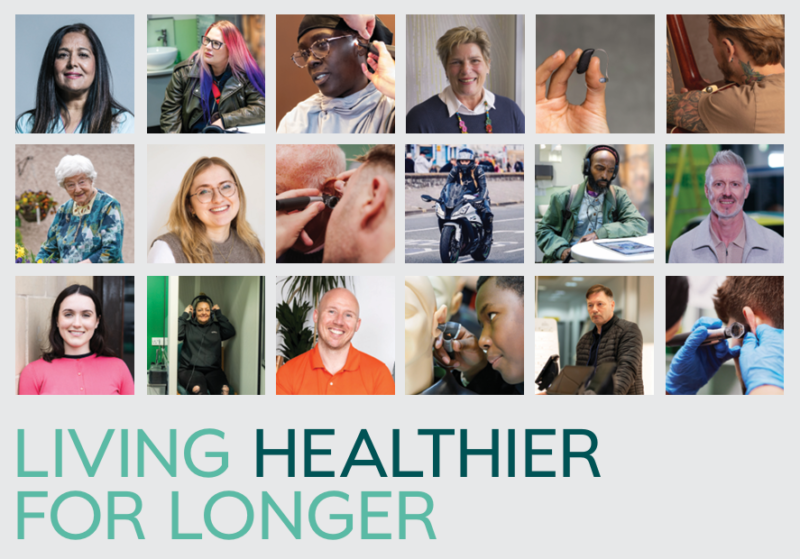
There is also a pressing need to raise awareness around how technology has advanced in hearing instruments, with a particular focus on modern aesthetics. This year, BIHIMA member GN Group launched The New Norm, a stigma busting image bank breaking visual misperception people have of hearing loss and reflect the true picture of modern hearing aids and those who wear them. We hope that the initiative encourages media outlets to stop using outdated images of hearing instruments and that more opportunities for modern images of those with hearing loss start to build around the country and beyond.
Looking forward: a healthier future for all.
Specsavers’ manifesto is not just a call to action for the government but also a plea to the general public to prioritise their hearing health. By recognising the signs of hearing loss early and seeking professional advice, individuals can significantly improve their quality of life. The report suggests that regular hearing tests should become as routine as dental check-ups, especially for those who are more likely to experience hearing decline.
By advocating for a nationally coordinated approach, increased public awareness, and better access to cutting-edge technology, the hope is that hearing care can become a public health priority. As the population ages, the importance of this issue will only grow, making it imperative for all stakeholders to take these recommendations seriously.