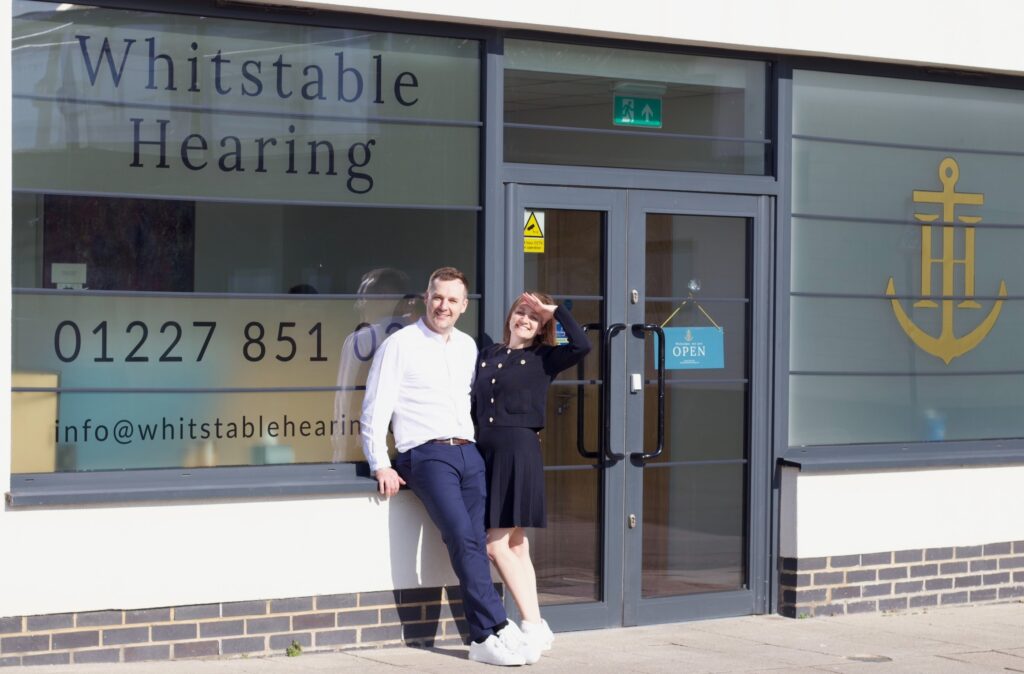
Adam Chell is changing the face of hearing care with his holistic, person-centred approach, and he encourages new audiologists coming into the industry to do the same.
Adam Chell kickstarted his audiology career back in 2009. Since that day, he has worked across a range of different areas, expanding his experience, knowledge and passion to the point that – in 2023 – he launched his own business with his wife, Amy.
Whitstable Hearing is now an award-winning audiology clinic with a clear ethos – to treat the person at the heart of the hearing loss, rather than just their condition.
We spoke to Adam about his journey into audiology, his main challenges and his advice for anyone taking their first steps into the industry.
Hi Adam, thank you so much for taking time out of your busy schedule today. First of all, can you tell us about your journey to where you are now?
I started my journey straight from school studying Audiology at Swansea University. If I’m honest, it was my Dad that brought my attention to audiology as a potential career choice. I knew I wanted to work in allied health; throughout school and college I thought this would more likely sit in podiatry or physiotherapy. Particularly with the latter, I had always loved PE, science and biology, so it felt like a great fit. But, my Dad spoke to me about this enormous shortage in audiologists and how the NHS were offering bursaries for audiology degrees. At 16/17, I hadn’t even heard of it as a profession, but the more I looked into it, the more interested I became. Thankfully, I quickly fell in love with it as a profession.
I qualified in 2009 and moved back to Kent where I started working as a paediatric audiologist for the NHS. I then had a brief stint in adult audiology, but soon realised that I enjoyed working with families too much, especially the experience of supporting them from beginning to end of the pathway. I then worked my way up before taking on the role of Chief Paediatric Audiologist at Basildon University Hospital.
From here, I decided that I wanted to see things from the other side of the fence – namely, how audiology worked from a manufacturing perspective. I worked for just over a year as the Regional Sales Manager for Phonak and genuinely learnt so much throughout that period. It was an amazing period which really cemented my clinical knowledge.
Of course, I ended up missing clinical work, so I shifted into independent hearing care in 2016. During this time, I was Clinical Director for a local hearing care provider. Then, in 2023, I decided to take the dive into launching my own business with my wife and Whitstable Hearing was born. I’ve never looked back!
That’s fantastic Adam – you’ve been in the industry for a long time, what are the main things that have changed?
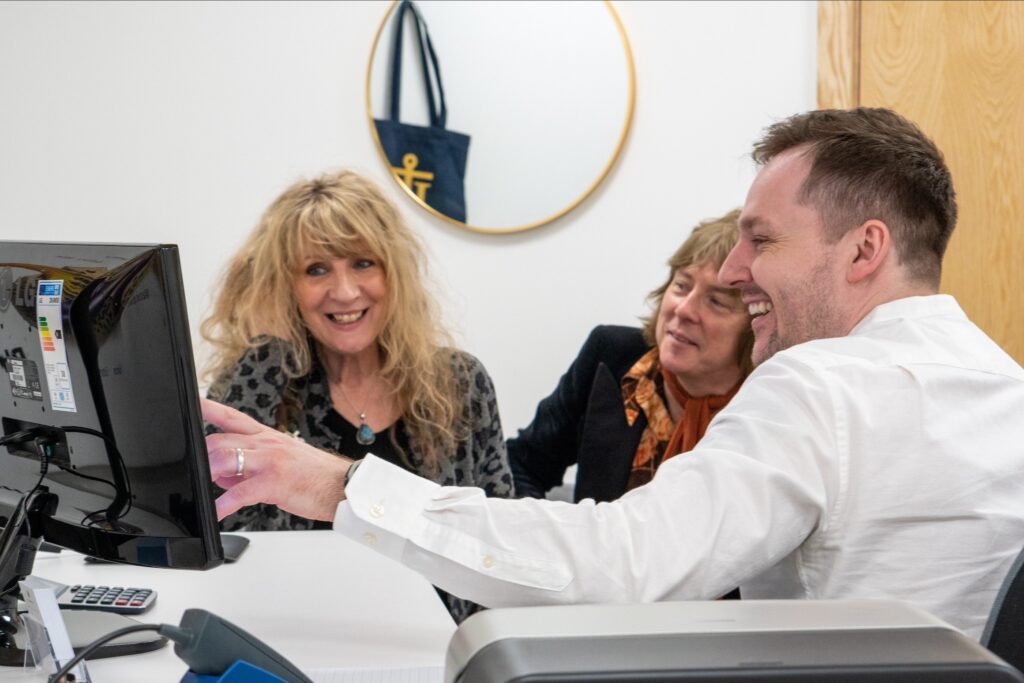
An enormous amount! But, if I had to drill it down, I think the clients we see are really changing. I see it as a new era of clients – in the past, we had a silent generation who would simply take our recommendations with minimal input on their part. Now, clients are coming in far more empowered. They’ve done the research – they know what they do and don’t want. It means discussions are constantly changing, and people are coming to the clinic far more educated than ever before, which is really positive.
My hope is that this will only keep improving as more manufacturers partner up with the big technology brands on over the counter devices. These partnerships have bigger marketing budgets, so they can achieve far higher awareness amongst people with hearing loss. We work closely with certain hearing aid manufacturers and we know that some are collaborating with household brands.
These projects will be huge, and hopefully work to minimise the stigma that still exists around wearing hearing instruments. Plus, as we encounter further advancements, we’ll also see that technology is better at meeting expectations.
It’s an interesting path and one that I believe is going to prompt people to adopt their hearing instruments at an earlier stage.
We really hope that’s the case. What have you found to be one of the biggest challenges in the industry?
This may be controversial, but for me personally, it’s been the introduction of AQP. This isn’t something I offer, but I have seen some satisfaction surveys and reports that examine customer experience in AQP vs hospital services and hospitals win every time. I’ve also heard this from clients anecdotally when they visit us after seeing a high street brand on an AQP service and report having had poor service.
The NHS can fit modern and attractive hearing instruments, whereas in my experience, this often is not the case in AQP, where some people seem to be offered older models. My worry is that dated, bulky, hearing instruments are being offered in AQP appointments to drive sales towards the sleek, modern, private versions. I think the scheme is vulnerable to manipulation in this way, and though I must be clear that not all AQP services are bad, the patient feedback I’ve heard is a cause for concern.
As an independent clinic, we do also face the unique challenge of varied pricing on hearing devices. Better price points can be offered to some big high street brands because they buy in larger quantities, which can feel unfair because we simply can’t access the products with the same ease that the corporate companies with major budgets behind them can. It can be an uphill battle, but one with little sign of easing.
Finally, we’d love to know what your advice is for new audiologists entering the industry?
Without a doubt, I would say focus on the human element of your job. I believe that hearing therapy is going to be a huge part of the future for audiologists, looking beyond the initial need for clinical care and hearing devices. You need to ask yourself: is this something I can be a part of? If so, you will be a leader in your field.
What we need to remember is that hearing care is not a ‘quick fix’ problem, there’s a process for people to go through because using hearing aids completely changes the way a person perceives sound – it’s like a workout for your hearing brain – and that can take time to get used to. It’s vital that clients and/or patients have the right support to guide them through that process.
It’s an enormously emotive time for someone with hearing loss, because choosing to adopt hearing technology is a huge decision and it can come with heavy feelings. Change is also very difficult for many people to deal with, so it’s up to us as professionals to meet the person where they are and truly support them with those changes.
This perspective is vital in everything I do; I’m all about seeing the human behind the hearing loss. Focusing on supporting people first and foremost is what makes all the difference – it should be the driving force in new audiologist’s careers.
I’m proud of the work we do in this space because of our holistic approach. For example, we run tinnitus support groups and sound baths. You can never escape tinnitus and people have said that these sessions give them the chance to get away from it for an hour, enough to really make a difference to their wellbeing. They can lose themselves in the sounds we create, finding space to be mindful and relax. I have become qualified to deliver sound baths myself because I was keen to understand the difference it made to people and it’s important for me to offer different types of support. I take a really physiological, pragmatic approach to it, and the client is free to take whatever they need from the experience.
I’m also constantly thinking of how I can make our clinic more accessible. We have extra wide corridors for wheelchair users, as well as a disabled toilet (you would be surprised at how often this isn’t something made available in audiology clinics).
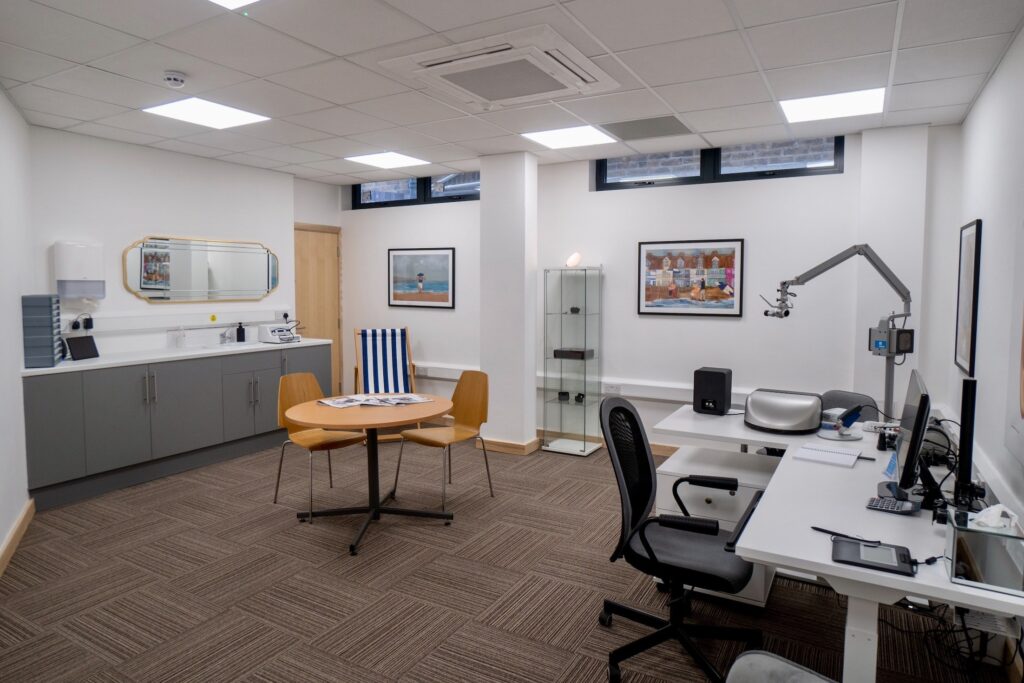
We’ve also made tweaks to the clinic room, such as using a stand up desk; this came about after a client with autism told us that they didn’t feel comfortable sitting for appointments. We didn’t want to sit down when they were standing, so now we have the option to align with whatever the client chooses to do. In general, the clinic room is designed to feel like a big living room; it’s super spacious, comfortable and welcoming.
We even give our clients a voucher to go and get a free portion of chips from the local chippy once they’ve seen us. We are located at the beach, after all!
Essentially, I want to say – don’t just be a hearing aid dispenser, forever at risk of being replaced by technology and AI. People need a human-centred approach to their hearing care, someone who can truly understand whatever they might need, and it’s that level of connection that is going to help audiologists survive.
What a note to finish on! Thank you so much Adam for this insightful and inspiring conversation. To find out more about Whitstable Hearing, you can visit their website.