Living with hearing loss but afraid to wear your hearing instrument? You aren't alone.
Approximately 11 million people across the UK are living with some form of hearing loss and it is predicted that, by 2030, 20% of us will have some form of hearing impairment, yet the number of people prioritising their hearing care is still far lower than it should be. For a great many, this comes down to hearing instrument usage – or, rather, lack thereof.
A study led by University of Manchester researchers has found that around 20% of people who have been issued with hearing instruments do not use them. BIHIMA’s own Eurotrak data also discovered that while 53% of hearing impaired people do use hearing instruments, the remaining 47% do not.
There are many reasons why this might be the case. Time and time again, audiologists are told:
“My hearing isn’t THAT bad.”
“Hearing aids are far too uncomfortable.”
“I don’t want to look old – I hate the way hearing aids look.”
“I’ve tried them before and they don’t work.”
“They don’t restore my hearing back to normal, so what’s the point?”
We live in a culture and society that places a high value our appearance and it’s clear that a stigma exists around hearing instrument usage. However, while it’s easy to appreciate the reasons standing against people wearing hearing instruments, the benefits are indisputable. From lowering the risk of developing dementia, to counteracting loneliness and helping to create more inclusive communities, the ripple effects of wearing well fitted hearing instruments are vast. And, with 95% of those who regularly wear hearing instruments saying that they have improved their quality of life, it’s time to get those hearing aids out of the drawer and back to where they belong.
Top 5 reasons why people don’t wear hearing aids.
According to Eurotrak 2022 data, some of the leading reasons why those with hearing loss are not wearing hearing instruments are:
- Hearing instruments are uncomfortable
- Their hearing loss isn’t severe enough to warrant a hearing aid
- Hearing instruments don’t work effectively, especially in noisy environments
- They are embarrassing to wear
- They don’t restore hearing back to normal
“Hearing loss is one of the most common sensory conditions around the world – here in the UK, one in six people have some form of hearing loss. While any worries around wearing hearing instruments are warranted, we want to educate people on the wide ranging benefits of regularly wearing hearing instruments,” said BIHIMA Chairman, Paul Surridge.
As an industry, we believe that it is our role to share the benefits of hearing loss solutions as widely as possible, working to tackle the overall stigma and address misconceptions that currently exist around hearing instruments.
1. Hearing instruments are uncomfortable.
Discomfort is a major issue when it comes to hearing instruments – particularly with regards to older or badly fitted hearing aids. This is why having your hearing instrument properly fitted is so important. Once you take it home, if the hearing instrument feels painful, go back to your audiologist. They can adjust the fit to make it work for you. Likewise, if your instrument is more than five years old and causing you serious discomfort, it could be time to get a new one.
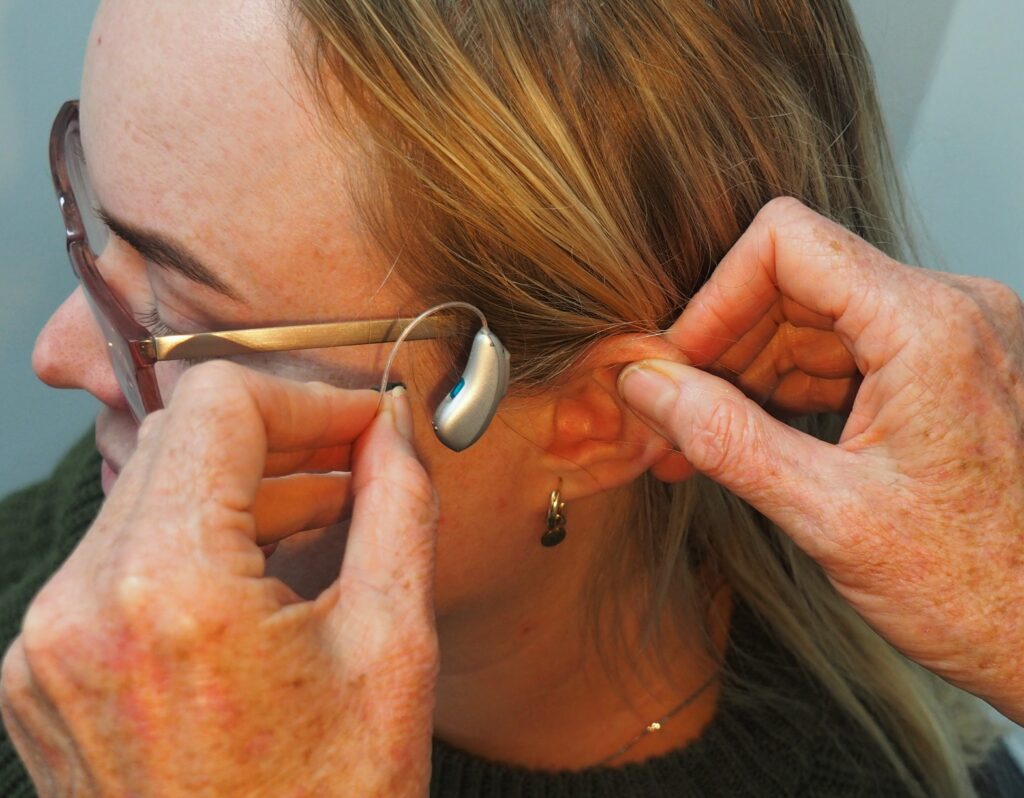
As with wearing anything new, it’s going to feel strange at first. When wearing your hearing instrument in those early days, take it slowly. Start wearing them gradually, with regular breaks in between. Give yourself the time to get used to them. It’s also vital to remember that modern devices are totally different to those from years ago. They’re sleeker, designed to wear all day and can even be worn comfortably with glasses.
2. My hearing loss isn’t severe enough to warrant a hearing instrument.
It’s very common for people with hearing loss to downplay the problem. Often, hearing loss can develop gradually, meaning individuals struggle to decipher when they feel ‘ready’ to seek help.
The issue with waiting to take action is that the knock on effects of hearing loss can be wide reaching and can start to embed into a person’s life. These can include:
- Higher risk of dementia
- Higher risk of mental health difficulties
- Social isolation and loneliness
- Negative impact on relationships
- Difficulties with sleep
- Less opportunities for career progression
“My question to those with hearing impairments is at what point are they ready to prioritise their health and wellbeing? A person’s hearing can be vastly improved with the use of a hearing instrument. This, in turn, will minimise the negative side effects of hearing loss, especially with regards a person’s emotional and mental wellbeing. Why wait until the issue has become such that those negative side effects have already started to play out in your life?” said BIHIMA Chairman, Paul Surridge.
3. Hearing instruments don’t work effectively – especially in noisy environments.
Being in a noisy environment is difficult and tiring for anyone, especially if you have a hearing instrument that’s trying to differentiate between sounds. This directly links to one of the major issues for those with hearing loss; it isn’t just about the actual hearing loss, it’s about the impact on their quality of life. There’s a large body of research available that explores the mental health impact for those with hearing loss and the differences between having the right hearing technology versus something ill-fitting (or none at all).
Fortunately, new technology means that a person’s ability to hear in noisy environments has been vastly improved. Nicholas le Goff, Director of Audiology and Clinical Research at Demant, has worked on a cutting edge hybrid compression system technology which enables wearers to hear better in all situations.
“Hybrid technology uses a multiple channel approach to enable a comfortable, enjoyable sound in a busy, noisy environment. However, the main benefit comes from the combination of the hybrid system with the more traditional approach to reducing noise. The primary technology breaks down into directionality and noise reduction. Really, this is the polar opposite to the hybrid system, which is all about amplifying noise. The sweet spot lies in making the two work together to produce a natural, crisp and clear sound. And that isn’t easy! There are countless ideas out there about how the two systems can work together; and these theories are great in theory or isolation. The reality is difficult, but it’s what we do and what we’ve achieved.” said Nicholas.
Demant’s is just one example of a wide range of hearing instruments on the market that can effectively differentiate between speech and background noise. The myth that all hearing instruments don’t work in noisy environments is no longer the case.
4. They are embarrassing to wear.
Despite efforts to change the narrative around hearing instruments, there is still a level of stigma when it comes to wearing hearing instruments. The World Health Organisation states: “Marketing strategies aim to improve hearing aid uptake by promoting those which are small and barely noticeable when worn. Perversely, such practices may strengthen the belief that hearing loss and use of hearing aids are stigmatising and should be hidden; actually this kind of information enhances the level of stigma.”
So, what can be done to change the perception around wearing hearing technology?
“It should be seen as a form of technology that will improve your quality of life, rather than a sickness, a disability, or a sign of your age. This could happen by shifting the way we talk about and market hearing technology. Current marketing that we might see in doctor’s waiting rooms or even in the media can depict hearing instruments as these cheap, enormous, and ugly things – a lot of the time they aren’t even hearing instruments and they look nothing like today’s technology.” said Anna Pugh – audiologist, hearing therapist, tinnitus specialist and manager at West Norfolk Deaf Association.
As time has gone on, hearing technology has gotten smaller, more sleek, available in a wider range of skin tones, smarter and more convenient.
(Interested in reading more about the developments in hearing technology? Visit our ‘technology’ page here).
5. They don’t restore hearing back to normal
While it’s true that a hearing instrument may not restore your hearing back to its original strength, it’s certainly going to make it better. Much like glasses, hearing aids aren’t a cure, they are a method of correction.
Of course, hearing aids are an investment – either financially or as an investment in positive changes that you plan to make to your life. You want to feel that the technology is working; that it’s having a considerable impact. And if a wearer doesn’t immediately recognise an improvement to their hearing, there’s a high chance that they’re going to feel frustrated.
“It’s important that audiologists set the right expectations for hearing instrument users. A hearing device will make it easier for you to communicate. It will enhance your confidence of being in groups and socialising. It will improve your sleep. It can improve mental health. Increase your independence. Improve job opportunities. A hearing instrument can help you get back to doing the things you love and give you your life back,” said Paul Surridge.
Most hearing instruments are programmable and if there are specific hearing situations that matter more to you, such as listening to music or being able to hear and converse in large groups, your audiologist can re-programme your hearing instrument for an enhanced experience in those scenarios. The smallest tweaks can make a big difference.
Ultimately, those living with hearing loss should take a moment to reflect on the things that matter to them the most in life. If better hearing can welcome more of those experiences back into your life, then what are you waiting for?
BIHIMA works collaboratively to highlight the life-changing impacts of hearing loss and how hearing technology can improve the lives and well-being of sufferers. Members share a forum to develop collaborative strategies that better inform health care professionals and the public on the value of hearing technology. Find out more here.